OurBrainBank is working with world-class GBM doctors and data scientists to explore new ways to gather and research data reported by patients and caregivers ourselves. We see this as a way to accelerate the search for new treatments, and to help people on the GBM journey to improve their quality of life.
A NEW FRONTIER.
OurBrainBank is working with world-class GBM doctors and data scientists to explore new ways to gather and research data reported by patients and caregivers ourselves. We see this as a way to accelerate the search for new treatments, and to help people on the GBM journey to improve their quality of life.
So far, the research being done around GBM has largely been confined to clinical trials – limited in number, often difficult to get onto. Advances in science and technology are opening up a whole new world of health data. We want GBM patients and caregivers to be part of that new frontier, driving change through their own reported data.
INTRODUCING THE HARVARD PROJECT.
OurBrainBank is excited to be working with Harvard scientists on a project that will effortlessly generate valuable data directly from volunteers. We’re proud to partner with neuro-oncologists at the Dana-Farber Cancer Institute and data scientists at the Onnela Lab at the Harvard T.H. Chan School of Public Health.
The project uses “passive data” — that is, data automatically generated on smart phones. We’re constantly generating data waiting to be captured and studied — eg number of calls or texts, physical mobility, or sleep patterns. This data can indicate how mobile we are, how connected we are to friends and family or, conversely, how isolated we are. Ultimately, our vision is to potentially help patients and doctors predict tumor recurrence prior to physical symptoms or the next MRI.
People with GBM are often left out of discussions about their own health journey. Our goal is that the GBM patient voice is incorporated into every clinical trial, all aspects of research, and all stages of treatment development.
OUR DATA MISSION
GBM patients access their own data, share data with clinicians to inform treatment options, and actively contribute to research.
FUTURE AMBITION.
In the future we hope that patients and caregivers will have access to their own data through a dashboard of information that they can access directly through an app on their phones. This dashboard might also be shared with their clinician to inform treatment options and help people actively engage in research. It might also one day be able to act as an early warning system should people become immobile or cease to communicate with others.
OUR HISTORY WITH DATA.
In 2019 we piloted an app that patients or caregivers used to track symptoms, share data with clinicians, and donate their data to medical research. We collected this active data from around 700 people with GBM and their caregivers on topics like supplements, diet and mood. The results of this study were positive and showed that the data generated could be helpful for both patients and their clinicians.
However, we encountered a problem that commonly arises with active data collection: over time people stopped inputting their measurements into the app. It was clear that active data – input directly by people at regular intervals – was of limited use. That’s why we resolved in our next iteration of the app to find a more convenient solution, and this led us to consider the use of so-called ‘passive data’.
SUPPORT US
We need your help in developing OurBrainBank into an even more powerful resource. Please help us pave the way for more patient data-led research into GBM.
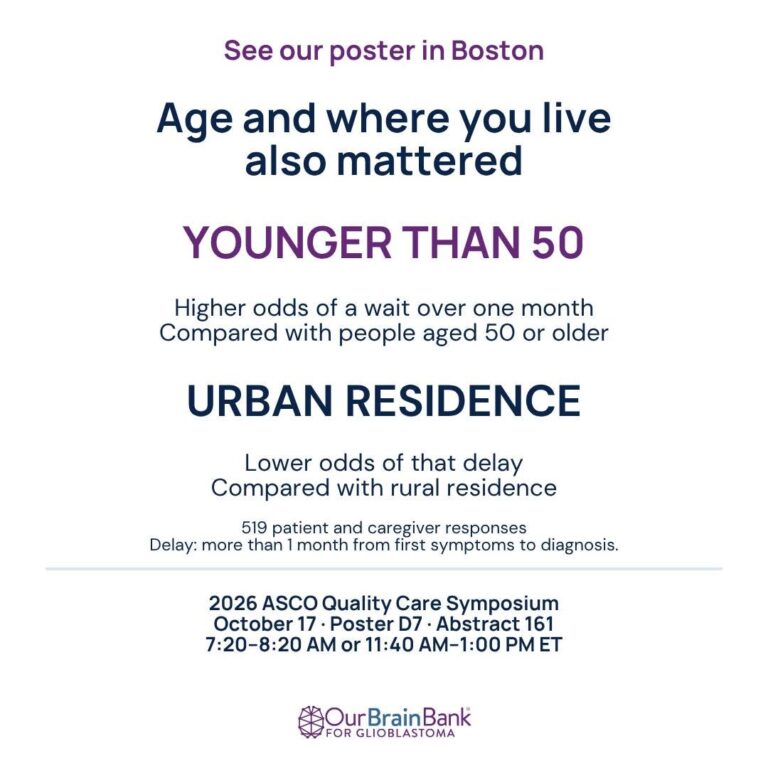
OurBrainBank’s glioblastoma survey found younger respondents (under 50) had a longer wait as did urban residents.
We’re presenting these findings and others at the ASCO Quality Care Symposium in Boston, October 2026.
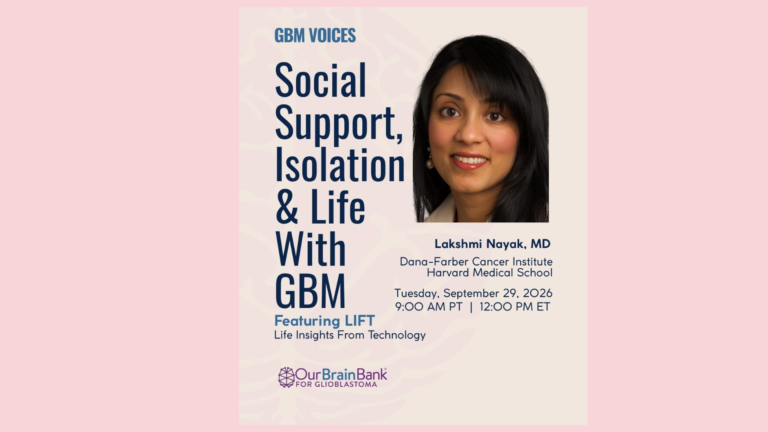
Lakshmi Nayak, MD, of Dana-Farber Cancer Institute. Dr. Nayak explains LIFT — Life Insights From Technology — and how researchers are exploring daily-life patterns and social support for people with GBM and their care partners.
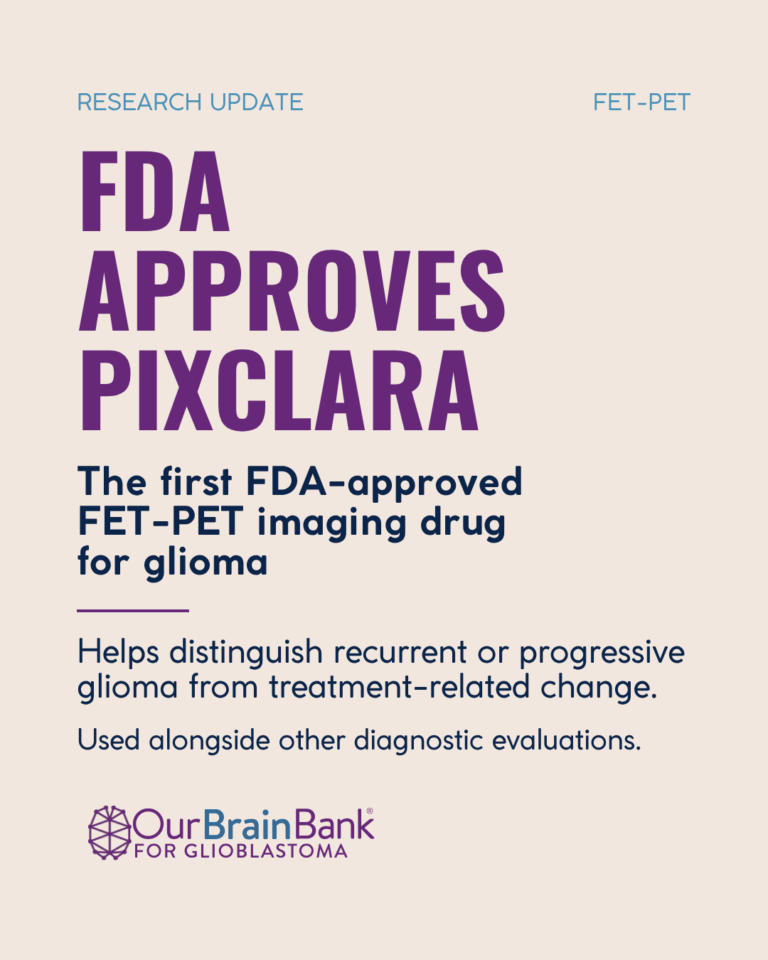
The FDA has approved Pixclara®, the first FDA-approved FET-PET imaging drug for glioma. Here’s what the approval may mean for patients and care partners.
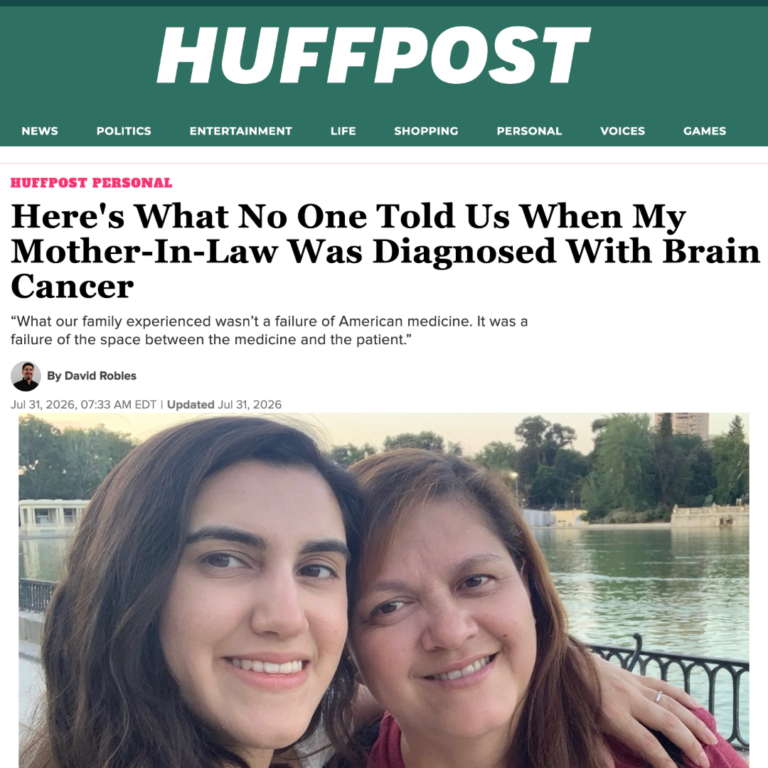
My mother-in-law Karla told me she had a brain tumor before she told my wife Michelle. Karla and Michelle were inseparable. Karla had Michelle at just 18, so in many ways, they grew up together. Michelle shared everything with her mom because Karla was her best friend…
OurBrainBank’s glioblastoma survey found younger respondents (under 50) had a longer wait as did urban residents.
We’re presenting these findings and others at the ASCO Quality Care Symposium in Boston, October 2026.
Lakshmi Nayak, MD, of Dana-Farber Cancer Institute. Dr. Nayak explains LIFT — Life Insights From Technology — and how researchers are exploring daily-life patterns and social support for people with GBM and their care partners.
The FDA has approved Pixclara®, the first FDA-approved FET-PET imaging drug for glioma. Here’s what the approval may mean for patients and care partners.
My mother-in-law Karla told me she had a brain tumor before she told my wife Michelle. Karla and Michelle were inseparable. Karla had Michelle at just 18, so in many ways, they grew up together. Michelle shared everything with her mom because Karla was her best friend…
We use cookies to improve your experience and analyze site traffic. By clicking “Accept,” you consent to our use of cookies. Learn more in our Privacy Policy.